دسته: اوج داستان

  • Redwood National and State Parks: My Favorite Things

    Redwood National and State Parks: My Favorite Things

    [ad_1]

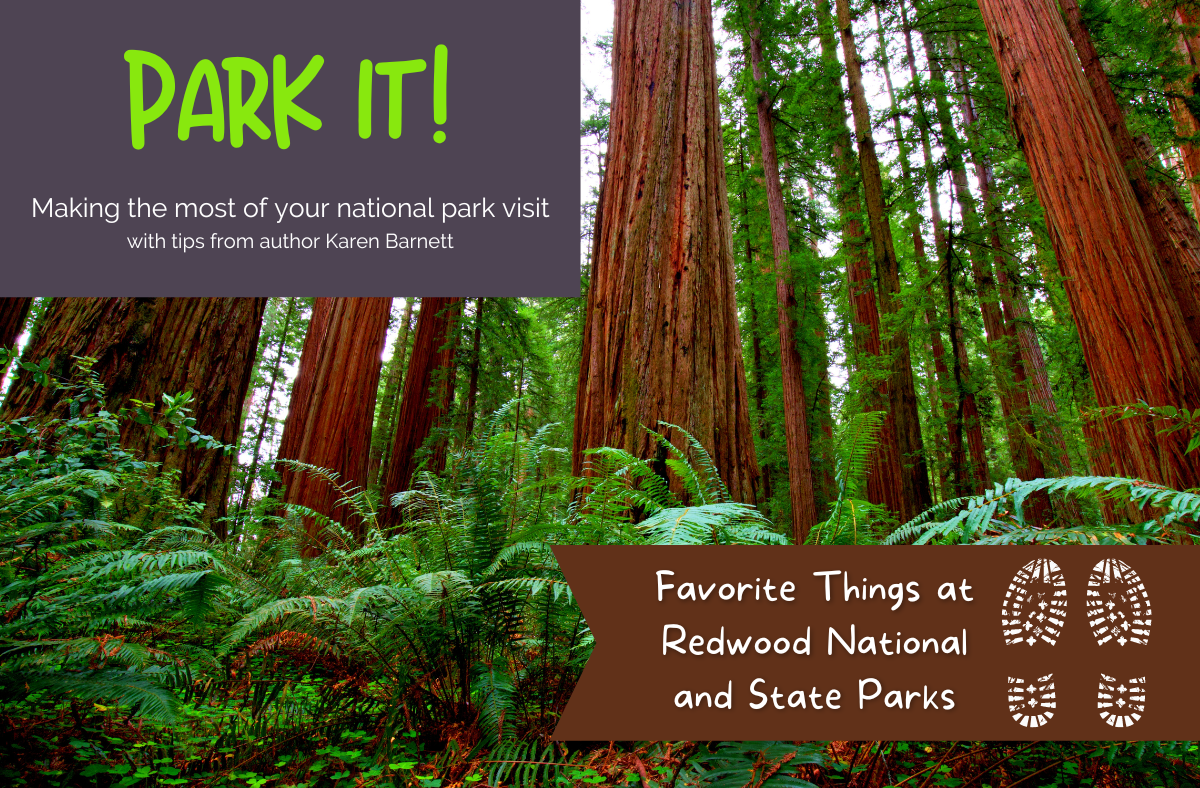
    Graphic showing Redwood forest. Text: Park-It. Favorite Things in Redwood National and State Parks

    Every national park has its own unique spirit and will impact visitors in different ways. Redwood National and State Parks? They will change you–almost down to the core of your being. My 21-year-old daughter and I visited recently for book research and to try out our new camper van. As I stared up at the ancient and giant trees, I was suddenly aware that the 50-odd years I’ve spent on this planet were but a tiny blip in the lifetime of these gentle giants. Even so, I felt welcomed. Does that sound strange? Maybe so, but I’m not sure how else to describe it.

    Here are some of our favorite things we saw in Redwood National and State Parks.

    A person (tiny) surrounded by ferns and looking straight up at the massive redwood trees. Redwood National and State Parks.
    Photo by Karen Barnett

    Trees

    Well, duh, right? The trees dwarfed everything else–both literally and figuratively. For the five days we were there, we found ourselves routinely pointing out trees to each other. “Look at THAT one!” You’d think it would get old, but it really doesn’t.

    A giant trillium plant with a hand next to it for perspective.
    Photo by Karen Barnett

    Gigantic ferns and trilliums

    We were starting to understand the references to Paul Bunyan. Seriously, they grow things ridiculously large in California. The photo shows a well-named “Giant Trillium: (Trillium chloropetalum) with my hand for reference. In my home state of Oregon, we usually see Trillium ovatum which is about 1/3 this size.

    A yellow banana slug crawling across green ferns.
    Photo by Karen Barnett

    Banana slugs and other crawly things.

    After the first few hours of hiking, we finally started looking down as well as up. That’s when we spotted some really cool wildlife in the understory. Banana slugs, Pacific sideband snails, beaded lancetooth snails, and tons of yellow-spotted millipedes.

    Three elk bulls, one with its nose lifted in the air.  Their antlers are covered in velvet. Photo taken at Redwood National and State Parks.
    Photo by Karen Barnett

    Elk and deer

    So. Many. Elk. We enjoyed seeing elk wandering around our campground (we stayed at a nearby RV park since the state park campgrounds were full) and then seeing many more of them grazing in a meadow at Prairie Creek Redwoods State Park. While we were observing the elk herd, a large number of black-tailed deer came out to graze in the meadow as well.

    Brown sign on gate that reads "Jedediah Smith Redwoods State Park is located on the land of the Tolowa Dee-ni'. The name of this place is Chvn-su'lh-dvn." The text is bordered by a geometric pattern.
    Creative Commons Photo, Richard A. Walker

    References to Indigenous Peoples

    I was impressed by the number of signs paying honor to the local indigenous peoples. The National Park Service doesn’t have a stellar reputation when it comes to its treatment of tribes, but it looks like the current administration of Redwood National and State Parks is making some positive changes. Nearly every building had a sign explaining the names native tribes use to refer to specific locations. My daughter and I also noticed that when displays discussed indigenous tribes, they used present-tense verbs. It’s a subtle difference, but when you write about tribes using only the past tense, you’re planting the idea that they no longer exist (or at least, no longer play an active role). By using the present tense, you’re recognizing that the indigenous people are still here! This type of wording can make a big difference in how visitors think about the situation. I did get a sense that the parks were coordinating their work with several of the local tribes.

    What we took home

    How does that saying go? Take only memories, leave only footprints? We’re taking home a lot of memories from our time in the Redwoods–specifically, a sense of our place in the world. I’ve been reading a lot about the history of logging and conservation in this region. But as I laid my hand on the bark of one specific tree and stared up at its impossibly-tall trunk, I thought, are we really caretakers of these trees? Were the Yurok and Tolowa before us? This tree has stood here for as many as 1500 years. With any luck, it might stand for hundreds of more years. That’s a humbling thought. I’m thankful that I got to stand at its base and contemplate my place in God’s intricate creation.

    Author hiking away from camera surrounded by massive trees at Redwood National and State Parks.
    Photo by B. Barnett
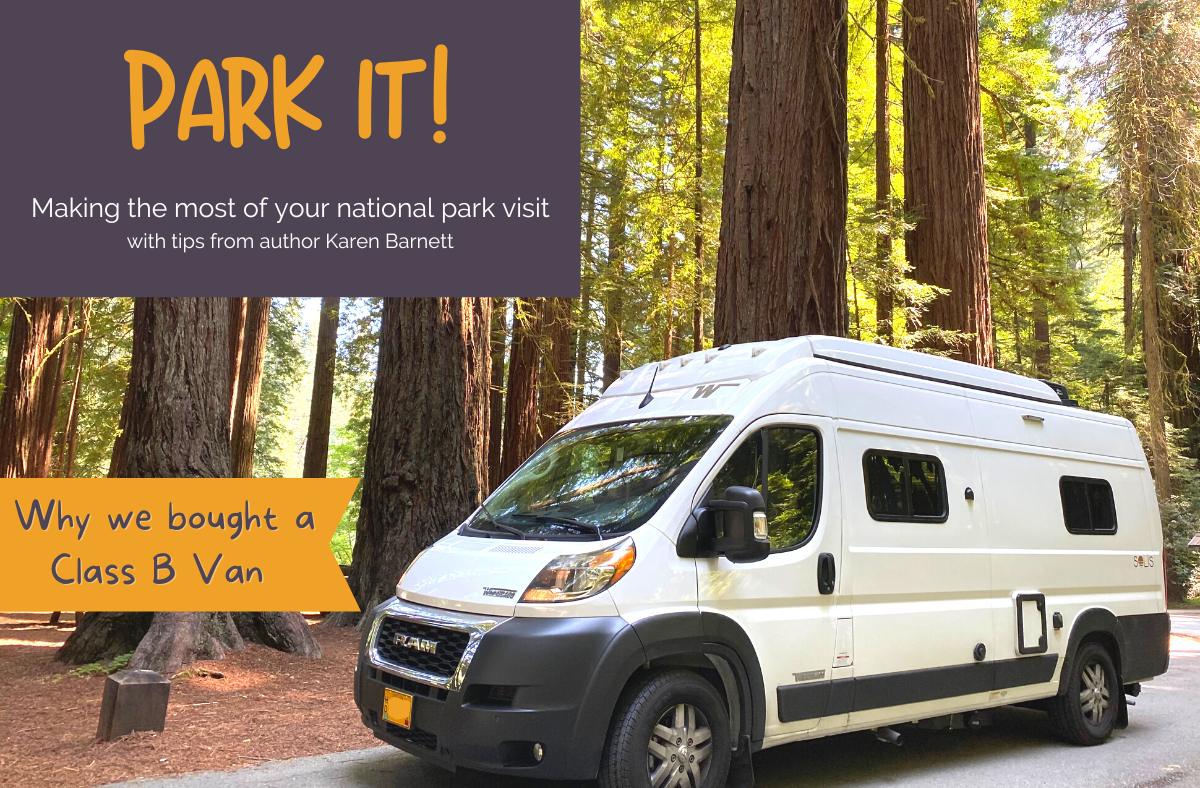
    White Winnebago Solis camper van parked in front of massive redwood trees at Redwood National and State Parks.
    Photo by Karen Barnett

    Blessings!

    [ad_2]

    Source link

  • Planning to visit National Parks in 2025? Read This First!

    Planning to visit National Parks in 2025? Read This First!

    [ad_1]

    Visiting National Parks in 2025? Read This First.

    There’s something deeply grounding about stepping into a national park—the hush in the canyons, the scent of sun-warmed trees, the sound of birds calling from beyond the bend in the trail. It’s where many of us go to breathe a little deeper and to appreciate the gift of God’s creation.

    But if you’re planning a trip in 2025, you may be worried that things will look a little different. Staffing is down in many parks. Visitor numbers are still high. Services that used to be a given might not be available. That doesn’t mean you shouldn’t go—quite the opposite, really. With a little extra preparation and a healthy dose of grace, you can still experience the wonder that drew you there in the first place.

    Here’s how to plan ahead and visit with both wisdom and wonder in your pack.

    1. Do Your Research Before You Go

    In years past, you might have strolled into a visitor center and picked up a paper map, chatted with a ranger about trail conditions, or signed up for a program. With lower staffing, those luxuries might not be available.

    Before you leave home:

    Visit the park’s official website for current conditions, alerts, and any reservation requirements.

    Download trail maps and directions—you can’t count on cell service.

    Look into apps like AllTrails or the NPS app to cache your route.

    If it’s your first time to that park, read up a bit. A well-loved guidebook or a ranger-led YouTube talk can add layers of meaning to your adventure.

    2. Expect Limited Services

    With fewer hands on deck, you might find closed restrooms, limited hours at visitor centers, and fewer trash pickups. It’s not ideal, but it’s manageable if you plan ahead.

    What to bring:

    • Your own water, snacks, and lunch (just watch out for the ravens and chipmunks—they’re clever).
    • A small bag to pack out your own trash.
    • Extra toilet paper and hand sanitizer for backcountry or vault restrooms.

    A little preparation here can turn a frustrating moment into just another story for the campfire.

    3. Be Your Own Naturalist

    While ranger talks and junior ranger programs might be on hold or scaled back, that doesn’t mean you can’t dive deep into the natural world around you. In fact, learning on your own might make it feel even more personal.

    Bring along:

    • A field guide or plant ID app
    • A nature journal (even a pocket notebook will do)
    • Curiosity, always

    Let the forest be your teacher. Let your questions lead you.

    Podcasts and audiobooks about your park can also make for great pre-trip or on-the-road listening. You might even want to check out Guide Along, which offers audio tours for various parks via your phone. We really enjoyed the Yellowstone one on our last trip.

    4. Stick to Designated Trails

    Trails are the threads that weave us safely through wild spaces. And in times of low staffing, it’s harder for rangers to keep an eye on fragile habitats and off-trail wanderers.

    Staying on marked paths:

    • Protects delicate plant life
    • Keeps you safe from hidden hazards
    • Makes it easier for search and rescue to find you—if that need ever arises

    Remember: your footprints matter.

    5. Pack Your Patience

    You may wait a little longer at the entrance gate. You might find the shuttle bus full or the trail a little more crowded than expected. And you might not see a single ranger on your entire visit.

    But you’re still there. Among the trees, beside the river, under the open sky. That’s the gift.

    When things get frustrating, take a deep breath and offer grace—to others, to the park staff doing their best, and even to yourself

    6. Essentials for your 2025 Adventures

    Here’s a quick checklist to help you feel confident and prepared:

    • Reusable water bottle
    • Layers for shifting weather
    • Trail map (downloaded or paper)
    • Snacks and a meal
    • First aid kit
    • Flashlight or headlamp
    • Small trash bag
    • Sunscreen, bug spray, hat
    • An open heart

    ✅ Bonus: Bring an extra map and share it if you see someone looking lost.

    7. Seek the Quiet Moments

    While the crowds gather at famous overlooks, try a lesser-known trail, a picnic by a creek, or a sunrise walk through the trees.

    It’s in those quiet, unscripted moments when you’ll discover a park’s unexpected blessings.

    Final Thoughts

    Things might look a little different for our national parks in 2025, but the trails are still calling, the trees are still standing, and the parks are still worth the effort. With a little preparation and a good attitude, you’ll walk away with something unforgettable.

    Curious which parks show up in my stories? Browse my collection of national park novels and see where the trails take you!

    Karen

    [ad_2]

    Source link

  • National Park Week Flash Sale

    National Park Week Flash Sale

    [ad_1]

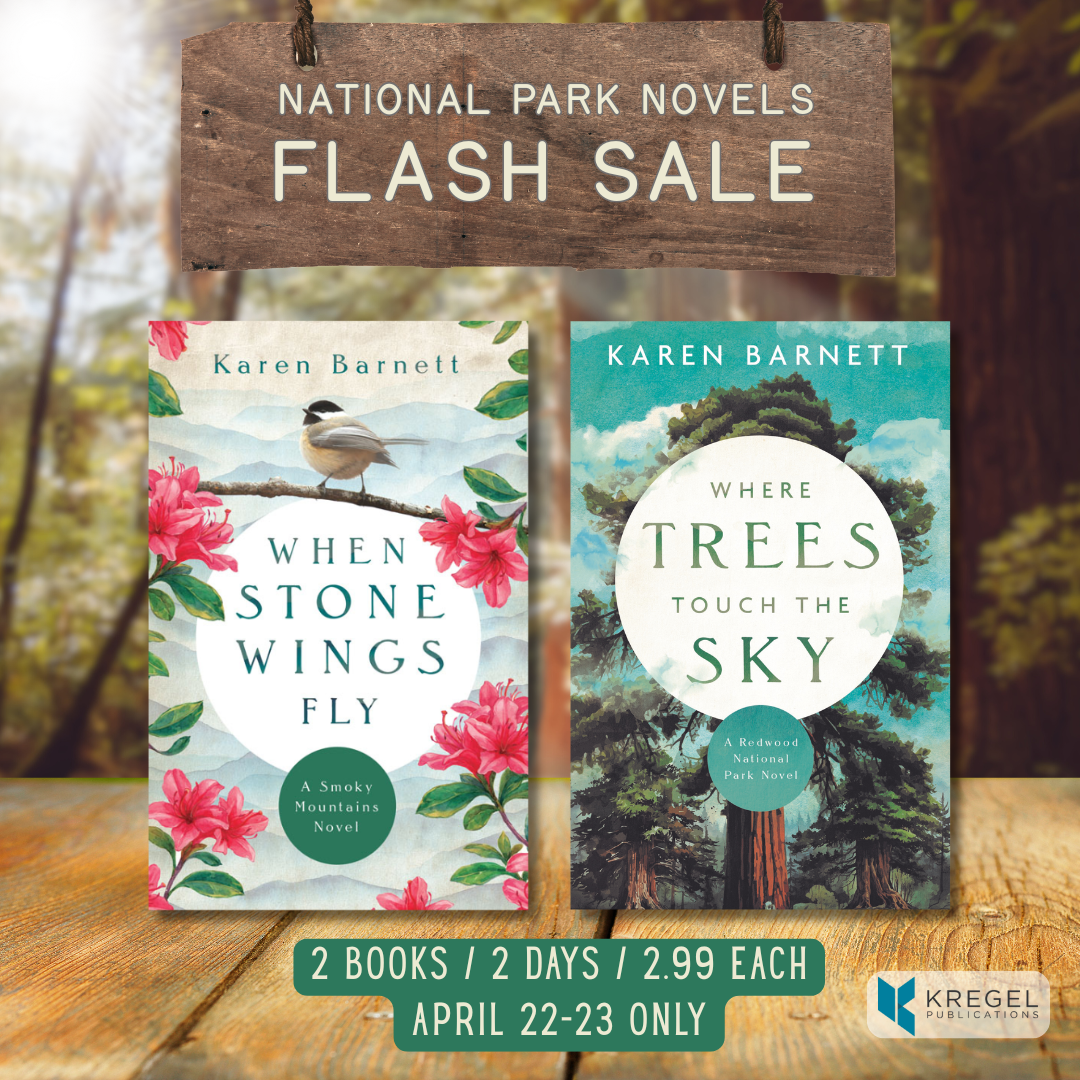
    2-day Flash Sale

    2 Days, 2 Books, $2.99 each. Don’t miss it!

    National Park Week is here—a time to honor the wild places that inspire awe, reflection, and a deep sense of wonder. To celebrate, I’m offering a special 2-day flash sale on two of my national park novels that are especially close to my heart.

    🌲 Where Trees Touch the Sky — Set in the towering majesty of Redwood National Park, this novel follows one woman fighting to protect the ancient trees and another striving to protect her family legacy.

    🪨 When Stone Wings Fly — Set against the misty backdrop of Great Smoky Mountains National Park, this story weaves together two generations of women searching for purpose, connection, and faith in the face of change.

    For just $2.99 each, you can journey through these rich landscapes and immerse yourself in powerful, nature-infused storytelling.

    📚 2 days. 2 books. $2.99 each.
    📅 Sale runs April 22–23, 2025
    📍 Available at your favorite ebook retailer

    Whether you’ve already explored these parks in person or dream of visiting someday, I hope these stories bring you closer to the beauty of God’s creation and the proud heritage of our national parks.

    Happy Earth Day, Happy National Park Week—and happy reading!

    Purchase on Kindle: Where Trees Touch the Sky
    Purchase on Kindle: When Stone Wings Fly

    Click here for more info about the books.

    Karen

    [ad_2]

    Source link

  • What it’s like to live in a national park

    What it’s like to live in a national park

    [ad_1]

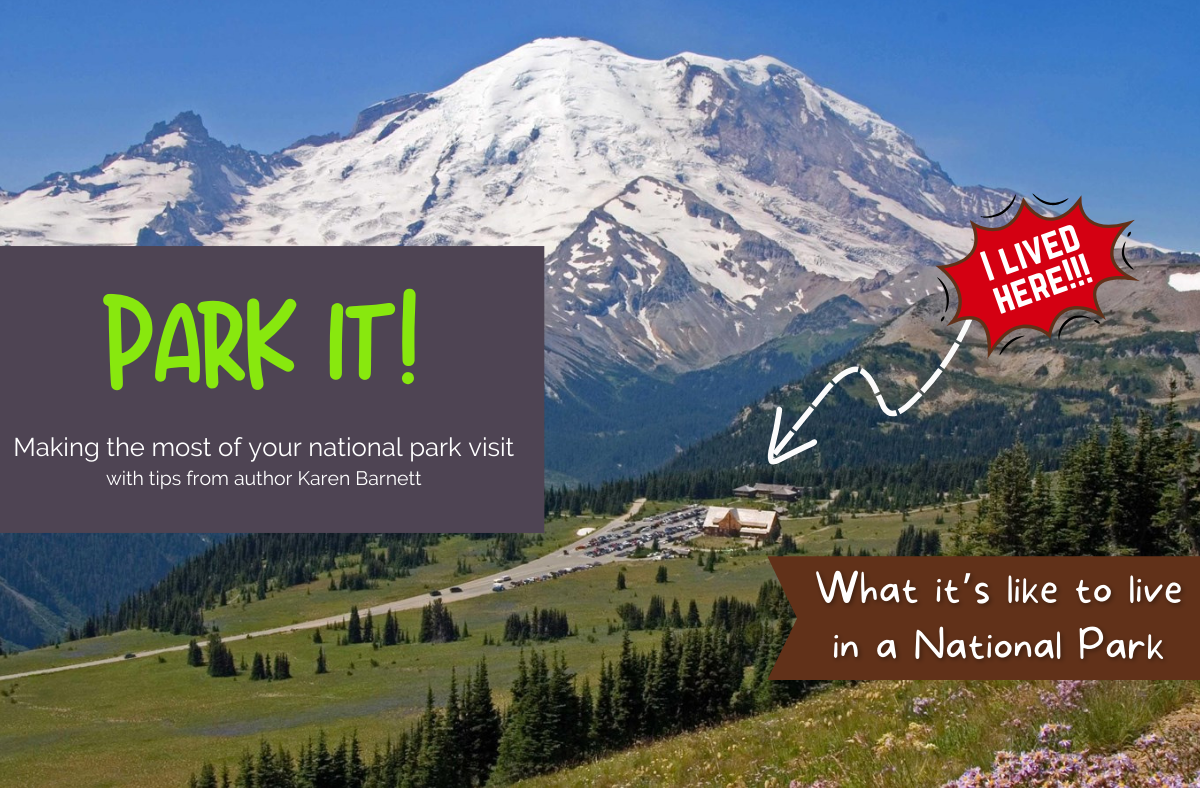
    Graphic of Mount Rainier with text saying "I lived here!!!"

    Have you ever wondered what it would be like if you could live in a national park? Some parks offer housing to their seasonal staff, and you certainly can’t beat the location! I had the joy and privilege of living in the Sunrise area of Mount Rainier back when I worked as a seasonal park ranger. As a single 20-something, I thought I’d won the lottery. But what are some of the actual pros and cons of living in a national park?

    Pro: Location

    Seriously. LIVE in a national park? People pay thousands of dollars to stay a single night at some of these locations, and I get to stay the entire season? I could fall out my back door and be on a hiking trail in less than five minutes. Elk wandered through the parking lot. I could roll out of bed and watch the sunrise paint the mountain in purple and pink hues. A ranger friend and I sprawled side-by-side on a deserted picnic table to watch the Perseid meteor shower. Does it get better than that?

    Con: Housing

    Most park housing leaves a lot to be desired. It can be anything from shared dormitory rooms to dilapidated trailers. It’s common to deal with rodent infestations, leaky roofs, plumbing issues, mold, and other problems. Wi-Fi or cell service? If you’re lucky. Do you have a spouse, significant other, children, or pets? The park may or may not be able to accommodate you. I remember reading that concessions staff at Yosemite are sometimes housed in tent cabins! There’s a movement to provide better housing for seasonals, but that takes time and money. My housing at Rainier had problems with rodents and insects, but I did have a large bedroom to myself both years. I also spent a month in housing at Longmire, where I had my own room in a small, shared house (that’s the “new” housing the characters refer to in my novel, The Road to Paradise.)

    That lower left window was my room during my first summer with the NPS. Photo NPS/Flckr.

    Pro: Community

    Most park staff have common interests, so the isolation can create tight-knit communities. At Mount Rainier, it wasn’t uncommon for us to sit up late sharing snacks and talking about books, music, hiking, and adventures.

    Con: Living with your coworkers

    Shared housing could be a nightmare if you don’t have a good relationship with your coworkers. The NPS has a bad reputation when it comes to women in the workplace. That can be even more dangerous when it comes to group housing situations. I didn’t experience any issues at Mount Rainier, but I have heard a few stories from other parks.

    Pro: No commute

    I literally stepped out my door and walked next door to go to work.

    Con: It’s a long way to civilization

    Craving fast food or pizza? Need to lay in some groceries? Want to catch a movie? From where I lived, it was an hour or more drive. I ended up buying a lot of non-perishable food so I didn’t have to waste my weekend hours trekking to the grocery store.

    Seasonal housing Mount Rainier. Small houses painted brown with trees overhead.
    Seasonal housing at Longmire where I lived for a time. Photo credit Flickr: Jasperado. https://www.flickr.com/photos/mytravelphotos/23320606234/in/photostream/

    Pro: Solitude

    Even though our parks have a huge number of visitors, most people leave in the evenings. And where I was at Sunrise, there was no overnight camping. So in the mornings and evenings, we had the place to ourselves. (I’m not sure that’s true anymore. I’ve heard rumors of people parking overnight even though it’s technically against regulations.)

    Con: No Privacy

    At midday, it’s hard to escape the public. In many parks, the seasonal housing is in a semi-private area. Where I was stationed, people could walk by and look into your windows. I reprimanded one guy for pressing his face to my bedroom window, and he argued back that as a taxpayer, he owned the building. (It’s not a valid argument since park rangers actually pay rent for their rooms, and the cost is based on housing costs in the local community.)

    Is it worth it?

    With all of that said, I still think that being able to live in a national park was the best part of working as a seasonal ranger. I was a graduate student and had done quite a bit of traveling that entailed sleeping on the floor or on people’s couches. The little quirks of housing as a seasonal park ranger didn’t bother me a bit. Now that I’m older and wiser (and more particular), I might be a bit more discriminating. Maybe. There’s also a possibility I’d appreciate the perks even more!

    Now that I write novels set in our national parks and spend months in front of my computer instead of on the trail, I’m a little jealous!

    Have you ever worked in a national park? I’d love to hear your story!

    Happy reading!

    Karen

    [ad_2]

    Source link

  • Christian Fiction Scavenger Hunt Stop #24

    Christian Fiction Scavenger Hunt Stop #24

    [ad_1]

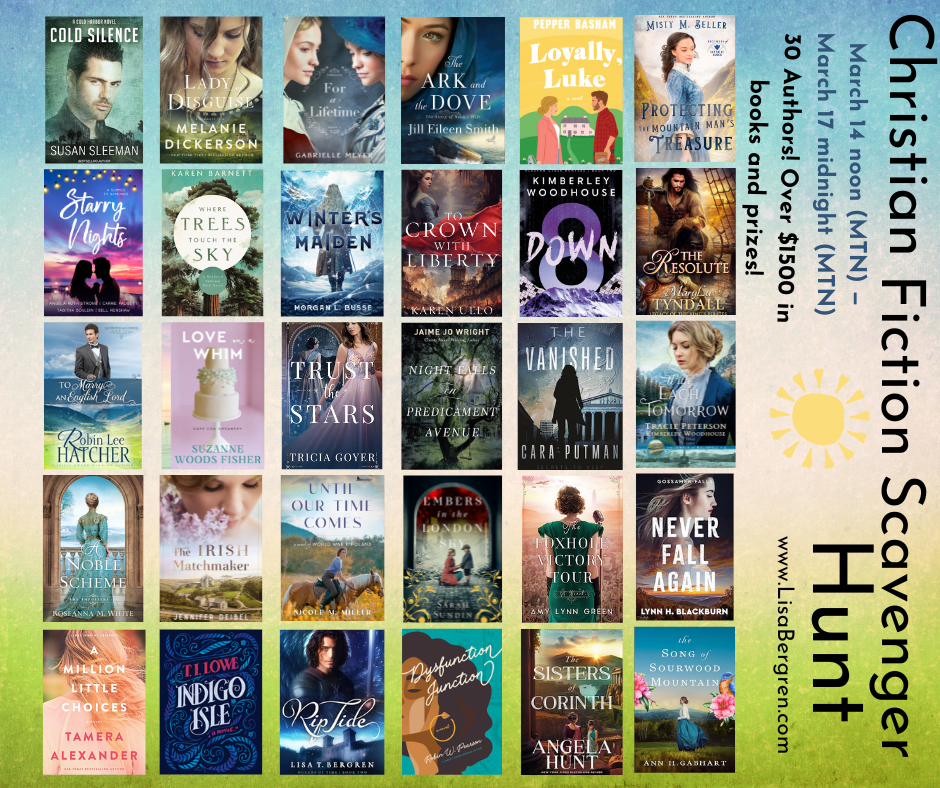
    Christian Fiction Scavenger Hunt

    THIS GIVEAWAY IS NOW CLOSED. Thank you for participating!
    Mallori N is the winner of my bonus giveaway and has been contacted by email. Congrats!

    Welcome to the Christian Fiction Scavenger Hunt! If you’ve just discovered the hunt, be sure to start at Stop #1, and collect the clues through all the stops, in order, so you can enter to win one of our top 5 grand prizes!

    • The hunt BEGINS on 3/14 at noon MST with Stop #1 at LisaTawnBergren.com.
    • Hunt through our loop using Chrome or Firefox as your browser (not Explorer).
    • There is NO RUSH to complete the hunt—you have all weekend (until Sunday, 3/17 at midnight MST)! So take your time, reading the unique posts along the way; our hope is that you discover new authors/new books and learn new things about them.
    • Submit your entry for the grand prizes by collecting the CLUE on each author’s scavenger hunt post and submitting your answer in the Rafflecopter form at the final stop, back on Lisa’s site. Many authors are offering additional prizes along the way!
    Author Karen Barnett in waders holding a hiking pole while standing beside a river.
    Karen hiking in Zion National Park, 2023

    Hi! My name is Karen Barnett.

    I’m a former park ranger, a nature nut, and a total history geek, and I like to write historical fiction that sweeps you off into national park adventures without ever leaving your home. You can learn more about me and my books here on my site and on Facebook, Twitter, and Instagram. With eight novels under my belt (four set in our national parks), I’m excited to announce that I have a new book releasing this August! My upcoming release is a dual-timeline story—Where Trees Touch the Sky: A Redwood National Park Novel.

    Here’s what it’s about:

    Where Trees Touch the Sky: A Redwood National Park Novel by Karen Barnett

    In the early 1920s, the accelerating destruction of the California redwoods is more than Marion can bear. Throwing herself headlong into the work of the Save the Redwoods League, she is shocked to learn that the man she’s grown to love is the son of one of the area’s worst timber barons. Though devastated by the betrayal, she realizes this could also be an opportunity–if only she can convince him to help preserve her favorite grove from his father’s grasp.

    Nearly fifty years later, in 1972, polio survivor June Turner is deeply proud of the legacy her great aunt Marion has left as a redwood warrior. And despite her disability, June is determined to prove herself capable as a ranger at the recently established Redwood National Park. When aspiring film student Adam Garner approaches June to help make a documentary about Marion’s life, she swiftly grabs the opportunity to spread her aunt’s worthy reputation. That is, until they unearth a secret that might shatter the family legacy.


    A person (tiny) surrounded by ferns and looking straight up at the massive redwood trees
    My adult daughter in the redwoods

    If you’ve had the opportunity to visit the California redwoods, you know how life-changing an experience it can be—the beauty, the size, and the age of these trees quickly put our everyday concerns into perspective. But if you haven’t been there, here are a few things these incredible giants can teach us.

    WHAT REDWOODS CAN TEACH US ABOUT LIFE, FRIENDSHIP, AND FAITH

    Sign post pointing out "big trees" in various directions

    You’re probably familiar with the expression, “You can’t see the forest for the trees.” When one visits the redwoods, it’s easy to get swept up in looking at individual trees. My daughter and I spent an entire hike pointing them out to each other. (“Look at this one. No, wait, how about THAT ONE?!”) And though each tree is marvelously unique, their mighty strength comes from the forest around them.

    A coastal redwood’s size is mind-boggling. The tallest on record measured over 380 feet tall (116 meters)—that’s higher than a 30-story building. You would think a tree this large would need roots that dig nearly that deep into the earth just to keep from toppling over in a light breeze.

    Would it surprise you to learn that redwoods have relatively shallow root systems?

    How does a tree that’s significantly taller than the Statue of Liberty keep from getting blown over in storms?

    Instead of reaching deep into the soil, each redwood tree extends its roots outward and intertwines with the roots of its neighbors. The trees support one another, deriving their strength and stability from those around them. A single redwood tree would be vulnerable to life’s storms and floods, but by living in community, they are strong.

    Author Karen Barnett stands on a wooden boardwalk and hugs a redwood tree while smiling.

    I tend to struggle with self-sufficiency and pride, finding it difficult to rely on others for anything. I want to be like a redwood, admired for my strength. But God also designed me to live in a community—my family, church, friends, and neighbors. As much as I try to serve those around me, there are also times when I need to rely on others to hold me strong and accountable when the storms of life are trying to knock me flat.

    Galatians 6:2-3 reads, “Share each other’s burdens, and in this way obey the law of Christ. If you think you are too important to help someone, you are only fooling yourself. You are not that important.”

    Philippians 2:3-4 Do nothing out of selfish ambition or vain conceit. Rather, in humility value others above yourselves, not looking to your own interests but each of you to the interests of the others.

    So I hope you’re living like a redwood–sharing God’s strength with those around you and learning to accept their help in return.


    Here’s the Stop #24 Basics:

    The release date will come fast, so, I encourage you to pre-order Where Trees Touch the Sky on Amazon, Barnes & Noble, Baker Book House, or at your local bookstore!

    Clue to Write Down: choose

    Link to Stop #25: the next stop on the Christian Fiction Scavenger Hunt is T.I. Lowe’s site!

    Author Karen Barnett with a stack of 8 novels.

    But wait! Before you go, I’m giving away an additional book to one entrant—the winner can choose any one of my books (even the new one if you’re willing to wait until August). All you have to do to enter my giveaway is sign up to receive my COMPASS CLUB newsletter (top right of this page) and then let me know in the comments below that you’re a subscriber. [Current subscribers can note that in the comments]. And to make this even more fun, while you’re commenting about being a subscriber, tell everyone which national park you dream of visiting! [This paperback giveaway is open to US addresses, only. For international winners, I can arrange to send you an ebook. The giveaway begins on 3/14/2024 at 12:01 am Mountain, and I’ll accept entries through 3/18/2024 at 12:01 am Mountain. The winner will be announced on March 22, 2024.] THIS GIVEAWAY IS NOW CLOSED. THANK YOU!

    Thanks for stopping by, and Happy Scavenger Hunting!

    Karen


    [ad_2]

    Source link

  • Park It: Why We Bought a Class B Van

    Park It: Why We Bought a Class B Van

    [ad_1]

    A Class B Van parked in the Redwoods with the caption: Why We Bought a Class B Van

    I’m a confessed national park geek who dreams of visiting every NPS site. But unfortunately, I’m also a wimp when it comes to tent camping. When my husband and I started looking into RV life, we discussed many different options from adorable mini teardrop trailers to fifth wheels, massive class A rigs, class C motorhomes, the class B van, and everything else we could find. To help us in our search, we made a list of our top priorities:

    1. A bathroom. I know many people are content with portapotties or (shudder) digging cat holes, but I like to have my own toilet and shower.
    2. A bed. Getting good sleep is important. In many smaller RVs, the table converts to a bed and vice versa, but we thought that sounded like a hassle.
    3. A comfortable place to work. (See the previous point!) I’m an author who writes novels set in national parks, and I plan to take my work with me so I don’t miss any deadlines.
    4. Easy to drive
    5. Easy to park
    6. Can camp anywhere–whether or not RV hookups are available.
    7. Bonus: Space for a guest or two to join us.

    We found everything we needed in the Class B vans. They’re simple to drive and take up about the same space as a large pickup truck. We wouldn’t have to tow anything, and could still park in most regular parking spaces. But when we got serious about shopping, sticker shock gave us pause. These vans rivaled the price of our first home! Trailers were so much cheaper. Seriously. So. much. cheaper. Were we crazy to do this?

    It took many months to get ourselves past this hurdle. Eventually, the allure of the open road and family trips won out. A trailer would tick some of our boxes, but not all. Plus, we’d have to buy a vehicle capable of towing one, an additional expense.

    After touring multiple vans and comparing prices, options, and features, we settled on a Winnebago Solis 59PX. It has a murphy bed with storage above and below, a separate dining/seating area, a wet bath (albeit TINY), a galley kitchen, a generator, and AC (for the dogs, of course). One thing that drew us to the Solis was the pop top. Our kids are in their twenties and might like to join us on the occasional trip, so we liked the idea of having a guest room (or tree house as I’ve started calling it). I’ve also found that opening the top when we’re parked gives us additional light and ventilation–always a plus! We’ve named her Jiffy Pop.

    So far, my husband and I have taken Jiffy on several weekend camping trips around the Northwest, my daughter and I traveled down to the Redwoods for a mother/daughter research trip, and this fall Steve & I packed up the dogs and drove to Utah to visit three more national parks. I love that we can fit in small NPS campsites and road turnouts for trailheads. You just can’t beat that.

    I’ve also found the van incredibly convenient for visiting my mom in her memory care facility. I was regularly spending over $200 a night for a hotel, but now I’ve gotten permission to camp in their parking lot. Steve’s also been able to participate in various tribal events that require an overnight stay. And this week, I sneaked away for a writing retreat at Belknap Hot Springs. *Sigh!* So quiet!

    Next week, I’m trying it out at a writing conference, instead of staying in the conference center lodge. Since I have unusual dietary needs, it’ll be handy to have a kitchen where I can throw together quick meals if needed.

    We’re looking forward to exploring more with Jiffy this summer. If you have suggestions for places we should visit, feel free to leave them in the comments. I’d love to hear your recommendations.

    Also, if you love seeing van photos, check out our gallery below or check out @JiffyPopVan on Instagram. Happy travels!


    [ad_2]

    Source link
  • National Parks Confession: I want to see them all, but here’s why I probably won’t.

    National Parks Confession: I want to see them all, but here’s why I probably won’t.

    [ad_1]

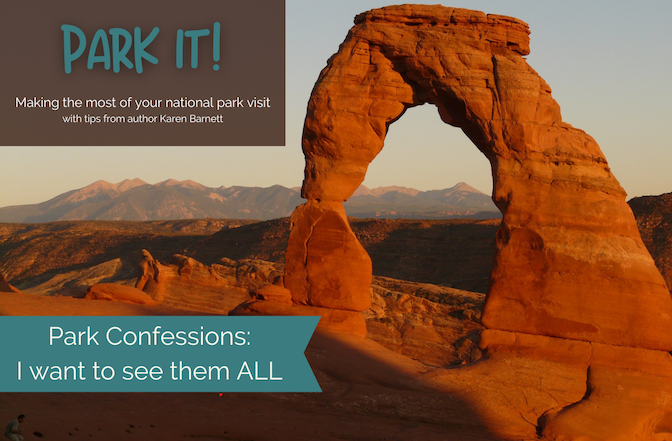
    An image of Arches National park with title "Park Confessions: I want to see them all."

    “I dream of visiting all of the National Parks.” The woman rubbed her hands together and her voice buzzed with intensity as I signed a copy of my new novel, Where the Trees Touch the Sky: A Redwood National Park Novel for her. “All 63 of them. I’m mapping out my dream trip.”

    I can’t tell you how often readers have said this to me–and to be completely honest–I’ve said it too! We collect the stickers on keepsake maps, write out bucket travel lists, and create Pinterest boards for our dream trips. News programs occasionally highlight tourists who have accomplished these sorts of goals, like this man who visited all 425 NPS sites (including monuments and other various designations) in a single year, or the youngest to visit all the parks, or––my personal favorite––Grandma Joy, the oldest person to visit all 63.

    I don’t know about you, but when I see these stories, I get an overwhelming urge to tick all the NP boxes.

    But how does our perspective shift when we make “seeing them all” our goal?

    When we race through our journey, we risk missing the very experiences we’ve been dreaming about. A national park is more than a pretty view. Each has a unique spirit, whether it be the landscape, the wildlife, the history, or how people interact with the location. And typically, you can’t tap into this experience with a one-hour visit to get your passport stamped.

    Think about your best experiences with nature when you were a child. Was it about getting another park stamp? I doubt it. More likely it was taking the time to watch a caterpillar walk along a leaf’s edge. Or wading in a creek and letting the minnows nibble your toes.

    Many of us have lost sight of that childlike wonder. Rather than soaking in an experience, we’ve boiled it down to a checkmark. The Japanese term, shinrin-yoku, is loosely translated as “forest bathing.” If we take the time to slow down, turn off our devices, and close our to-do lists, it gives our bodies and souls space to breathe.

    Our national parks are busier than ever, but I sometimes wonder how many visitors are seeking the rest and rejuvenation provided by nature instead of racing about trying to visit every view they saw on Instagram. When my husband and I planned our Zion trip last year, I did my research. I watched YouTube videos about trip planning, perused the park’s website, and educated myself on the shuttle system. There are multiple Facebook groups and discussion boards dedicated to Zion trips, and almost all the posts focus on two specific must-see hikes. After reading through the posts, it’s easy to buy into the idea that without these experiences, you’ve somehow missed out on what makes Zion unique. It’s FOMO (Fear Of Missing Out) at its worst.

    But the truth is quite the opposite. What if you visited Zion and spent time just sitting beside the Virgin River, listening to the sound of the water rushing by? You could stare up at the Navaho sandstone cliffs and watch as the light changed from minute to minute–from the dawn colors to the glare of the afternoon sun and shadows. Maybe you’ll choose to hike one of the lesser-known paths and be blessed by spotting a sunbathing lizard or a herd of bighorn sheep. Would your trip be somehow “less than” for not jockeying for position at one of the must-see locations? Probably not.

    I recently turned in my manuscript for my next novel, set in–you guessed it!–Zion National Park. My main character is grappling with this very issue as she walks away from a high-powered career to spend the summer at Zion, only to saddle herself with a lengthy to-do list for her stay. [Don’t bother looking on Amazon for this book quite yet–it’s not scheduled to be released until fall, 2025. Stay tuned!]

    Two sets of feet kicked back in the foreground with Mount Rainier in the distance.

    My favorite trails at Great Smoky Mountain National Park were those labeled simply as “Quiet Walkways.” They don’t take you to an epic waterfall or gorgeous viewpoint. It’s all about experiencing the forest itself. My favorite thing to do at Mount Rainier is find a quiet place to sit and then soak in the mountain’s magnificence. I introduced my daughter to this concept on a recent trip–showing her both my favorite unpopular trail and my special secret spot.

    So every time I feel myself longing to visit all 63 national parks, I need to slow down and remind myself why I love the national parks in the first place. It’s about experiencing the beauty and peace that nature has to offer. To “meet” each park with an open mind, and then spend time truly getting to know it. Rather than visiting Utah’s “Mighty Five” in five days, or “one week to see as many US NPs as possible” I’d prefer to spend those same days visiting one or two and really immersing myself in everything they have to offer.

    There’s nothing inherently wrong with the desire to “see them all.” Just be sure your trip doesn’t morph into exactly what you’re trying to escape about day-to-day life–just another task to complete.

    Happy travels, everyone!

    (Are you visiting from my COMPASS newsletter? Be sure to hop back over and enter the READER’S WONDERLAND GIVEAWAY! )

    Karen

    [ad_2]

    Source link